Blog
Beanies for Custom Printing: Bold Style That Lasts


Beanies for custom printing turn a simple knit cap into a wearable billboard for brand logos, event graphics, or vintage-inspired art that stands out in a crowd. Because the fabric sits close to the head and offers a flat, foldable panel, beanies take screen printing and embroidery exceptionally well, which is why they show up everywhere from off-road meetups to small-business merch tables. This guide walks through what makes a beanie print-ready, how the process works, and where to find soft-feel, wash-resistant options built for repeat wear. Along the way, you will see how a company like Mild 2 Wild Custom T-Shirt Apparel approaches headwear with the same bold, rebellious spirit found across its apparel lines.
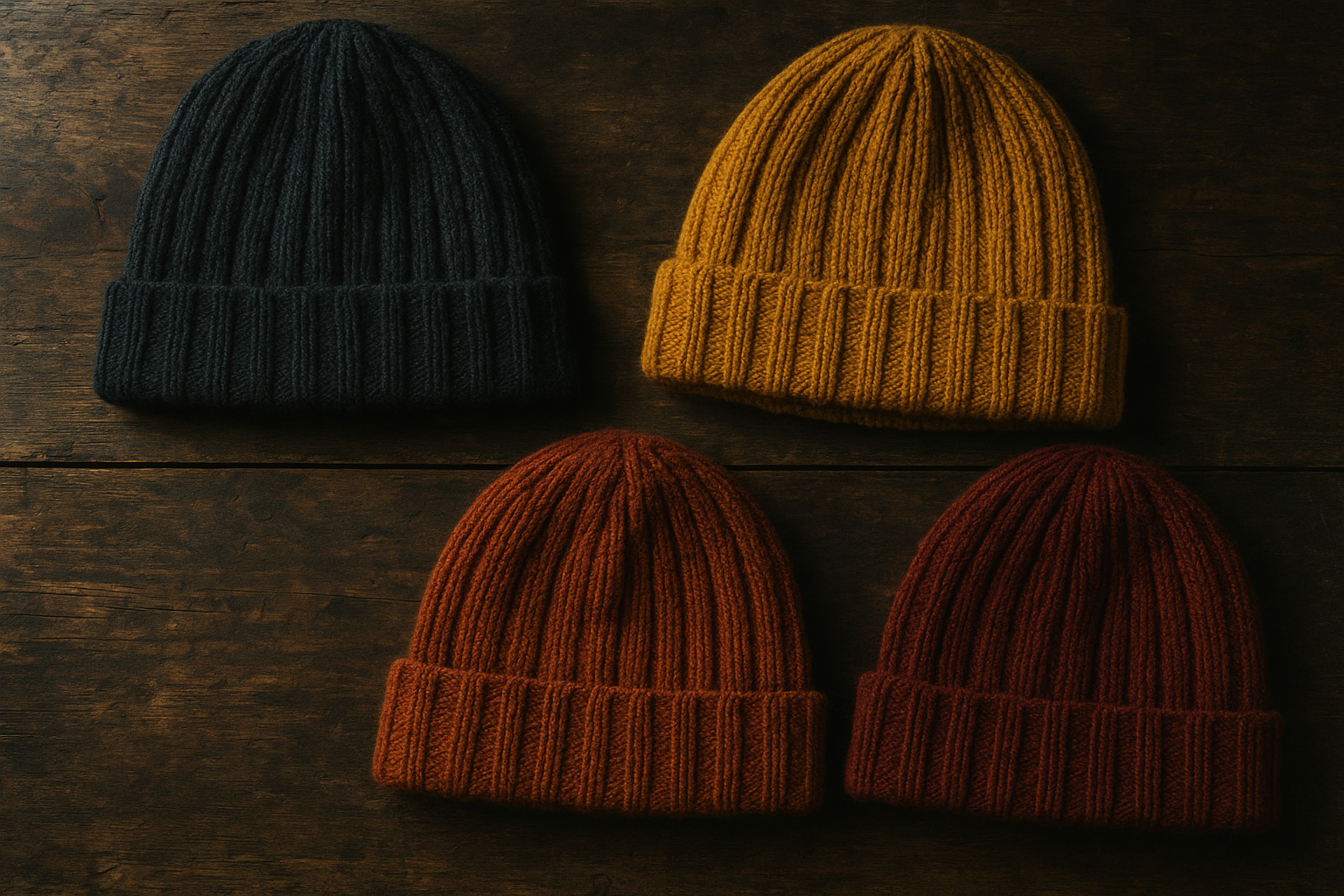
Soft-feel beanies for custom printing, ready for screen printing or embroidery.
What Are Beanies for Custom Printing?
Beanies for custom printing are knit or fleece caps manufactured with a flat surface area—usually the folded cuff or front panel—specifically suited to hold screen-printed ink, embroidery stitching, or heat-transfer vinyl without warping the shape of the hat. Unlike loosely knit fashion beanies, print-ready styles use a tighter knit or fleece-lined construction that keeps designs crisp through washing.
In practice, the blank you choose matters just as much as the artwork itself. A poorly constructed beanie can pucker under a heat press or crack ink at the seams, while a quality blank holds its shape and color for years. For example, soft-feel, premium-quality fabric resists fading through multiple wash cycles, which is the standard used across Mild 2 Wild’s headwear line, including the full beanie collection.
Why Brands and Crews Choose Custom Printed Beanies
Headwear sits at eye level, so a well-placed logo gets noticed fast. As a result, beanies for custom printing have become a go-to item for off-road clubs, small businesses, and event organizers who want visibility without the bulk of a full jacket or hoodie. In addition, beanies are unisex and one-size-friendly, which simplifies bulk ordering for teams and staff uniforms.
Shoppers who want a bold, ready-made look can browse custom beanies with logo already applied across themed collections, while businesses can request fully custom artwork for team gear or retail lines. Either way, the underlying fabric and print quality stay consistent, which matters most for repeat wear.
Soft-Feel Fabric That Resists Fading
Fabric choice determines how a printed design ages over time. Specifically, tighter-knit acrylic and cotton blends hold plastisol ink better than loose, chunky knits, because there is less texture for the ink to bridge over. Consequently, brands that expect a beanie to survive dozens of wash cycles typically specify soft-feel, premium fabric rather than the cheapest blank available.
According to general screen printing industry standards, plastisol ink cures at temperatures between roughly 300°F and 330°F to permanently bond with fabric fibers—a step that directly affects wash durability. Skipping proper curing is one of the most common reasons budget custom apparel fades or cracks early. For a closer technical look at how ink and fabric interact, Wikipedia’s overview of screen printing explains the process in more detail.
Vintage-Inspired Beanie Designs With a Modern Edge
Design direction matters just as much as fabric. Mild 2 Wild builds its headwear around themed collections—Off Road, Hot Rod, Fuel-Hog Wild Boar, Rat Rod Rebel, Crazy Rednecks, and Redneck Rat—each pulling from 70s and 90s styling while adding a modern, bold twist. Therefore, shoppers who want an established look rather than a blank canvas can pick a beanie that already fits the “Built Wild. Born Loud.” identity.
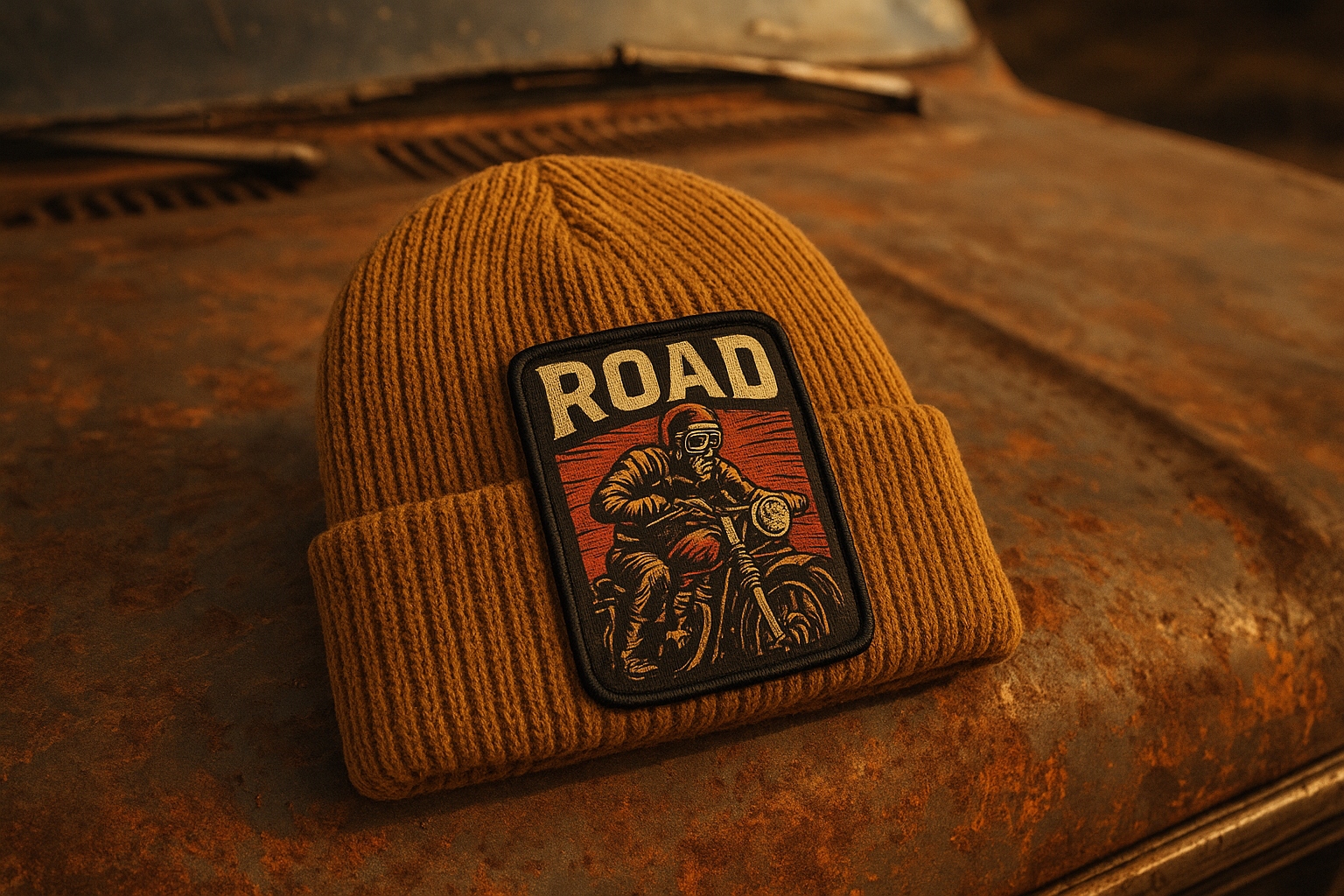
A vintage-inspired beanie for custom printing, styled around bold motor-culture graphics.
Meanwhile, customers with their own logo or artwork can request the same soft-feel fabric and printing quality used across the ready-made line. The full beanie collection shows current colorways and styles available as a starting blank for custom work, whether the goal is a single piece or a themed run for a club.
How to Order Beanies for Custom Printing in 5 Steps
Ordering custom headwear does not have to be complicated. The following steps outline a typical workflow from blank selection to finished product.
- Pick a blank style and color. Choose a beanie style, color, and fit from the available headwear lineup, keeping in mind that darker fabrics typically show lighter ink colors more vividly.
- Submit or develop artwork. Send existing logo files or work with a design team to build vintage-inspired artwork, making sure text and fine details stay above the minimum print size.
- Select the print method. Decide between screen printing for bold, flat colors or embroidery for a textured, long-lasting finish, since each method suits different design styles and budgets.
- Approve a digital proof. Review a digital mockup that shows placement, color matching, and sizing before production begins, since changes are far easier to make at this stage.
- Choose your order size. Decide between an individual order or bulk ordering for teams, events, or retail, since larger quantities generally lower the per-unit printing cost.
Bulk Ordering and Business Options for Custom Beanies
Bulk orders bring per-unit costs down, which matters for clubs, construction crews, and small businesses outfitting staff. In addition, ordering in bulk lets a brand pair beanies with matching pieces, such as an oversized heavyweight sweatshirt, to build a complete cold-weather lineup without mismatched printing quality.
Trade observations across the custom apparel industry suggest that a meaningful share of bulk clothing orders—commonly cited around 20 to 30 percent—include headwear as an add-on item, since it is inexpensive to add once artwork already exists. Similarly, businesses that plan ahead for both apparel and headwear tend to spend less per unit than those ordering each category separately.
Beanies vs. Other Custom Printed Headwear
Beanies are not the only headwear option for custom printing. Structured caps and dad hats offer a wider front panel for larger logos, while beanies work best for smaller marks or minimalist wordmarks placed on the cuff. For example, the dad hat gives more surface area for detailed artwork, whereas a beanie keeps branding subtle and cold-weather practical.
Similarly, browsing matching hat styles can round out a full headwear lineup for teams that want options across seasons. Choosing between the two often comes down to logo size, climate, and how formal the branding needs to look.
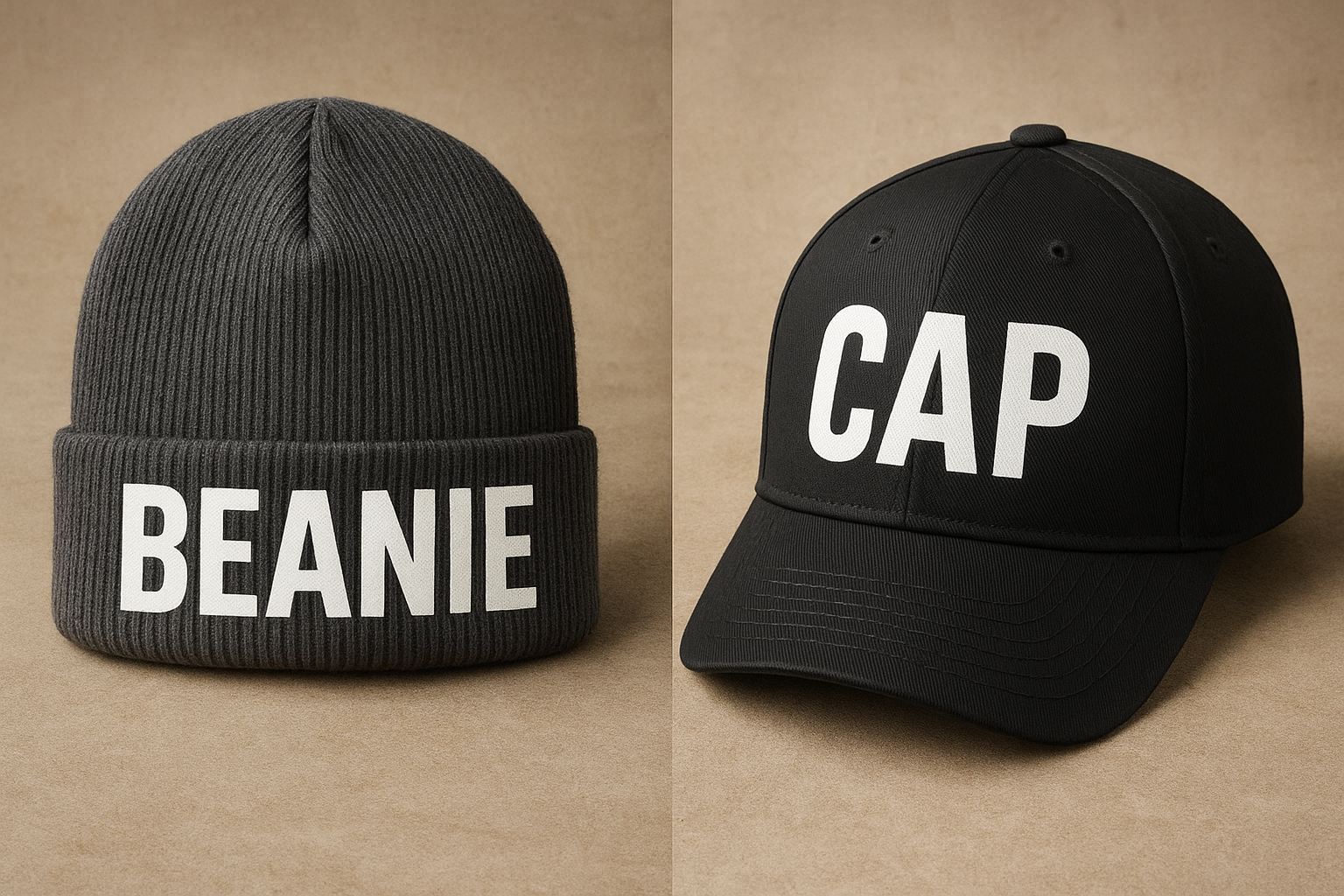
Comparing beanies for custom printing against structured caps for logo placement.
Frequently Asked Questions About Beanies for Custom Printing
What are beanies for custom printing?
Beanies for custom printing are knit or fleece caps built with a flat panel or cuff designed to hold screen printing, embroidery, or heat-transfer designs without losing shape. They typically use a tighter knit than fashion-only beanies so artwork stays crisp through washing.
How do beanies get custom printed?
Most beanies are decorated using screen printing, embroidery, or heat-transfer vinyl, with the artwork placed on the front cuff or panel. Screen printing suits bold, flat-color logos, while embroidery adds texture and extra durability.
Why are beanies for custom printing popular for brands and teams?
Beanies sit at eye level and are unisex, one-size-friendly items, which makes them easy to order in bulk for staff, clubs, or events. They also offer year-round wearability compared to bulkier branded outerwear.
What’s the difference between screen printing and embroidery on beanies?
Screen printing lays flat ink onto the fabric surface and works well for detailed, multi-color artwork, while embroidery stitches thread through the fabric for a raised, textured logo. Embroidery generally lasts longer but suits simpler designs.
How much do custom printed beanies cost?
Pricing depends on the blank quality, print method, and order quantity, with bulk orders lowering the per-unit cost significantly. Embroidery typically costs more per unit than screen printing due to setup and stitch time.
How long does it take to get custom beanies printed?
Turnaround usually depends on proof approval speed and order size, with small runs often finishing faster than large bulk orders. Requesting a digital proof early in the process helps avoid production delays.
What fabric works best for beanies for custom printing?
Soft-feel, tighter-knit acrylic or cotton-blend fabric holds ink and stitching better than loose, chunky knits. This fabric choice also helps designs resist fading through repeated washing.
Can I order a small quantity of custom beanies, or is bulk required?
Individual orders are available for shoppers who want a single custom piece, while bulk ordering is offered for teams, events, and businesses needing larger quantities. Bulk orders generally reduce the cost per unit.
What common mistakes should I avoid when designing beanies for custom printing?
Common mistakes include using text that’s too small for the cuff area, choosing ink colors that blend into the fabric, and skipping a digital proof before production. Reviewing placement and contrast ahead of time prevents most reprints.
How do I care for custom printed beanies so the design lasts?
Washing beanies inside out in cold water and air-drying helps preserve both the fabric and the printed or embroidered design. Avoiding high heat in the dryer prevents cracking or shrinking of the printed area.
Can custom printed beanies be paired with matching hats or sweatshirts?
Yes, beanies can be ordered alongside matching caps or heavier layers like an oversized sweatshirt to build a coordinated seasonal lineup. Using the same printing process across pieces keeps color and quality consistent.
Do custom printed beanies work for both individual gifts and bulk business orders?
Beanies for custom printing suit both use cases, since a single personalized cap makes a strong gift while the same design can scale into a bulk order for staff or events. The production process stays largely the same regardless of quantity.
Final Thoughts on Choosing Print-Ready Beanies
Choosing beanies for custom printing comes down to three things: a quality blank, the right print method, and artwork sized correctly for a small panel. Soft-feel, tighter-knit fabric resists fading far better than budget alternatives, and a digital proof before production avoids most costly mistakes. Whether the goal is a single vintage-inspired beanie or a bulk order for a whole crew, matching fabric and print quality across pieces keeps a brand looking consistent season after season. For reference on care labeling requirements that apply to finished apparel, the FTC’s textile labeling guide offers useful background. In the end, beanies for custom printing remain one of the simplest ways to add bold, lasting branding to everyday headwear, and options like those from Mild 2 Wild Custom T-Shirt Apparel show how vintage styling and durable printing can work together.