
Blog
Custom Printed Beanies: Bold Styles That Last for Years


Custom printed beanies give brands, crews, and individuals a simple way to turn a basic knit hat into a bold, wearable statement. At Mild 2 Wild Custom T-Shirt & Apparel, these personalized beanies are built on the same soft-feel fabric and fade-resistant printing used across our vintage-inspired apparel lines. Whether you want a logo for your off-road club or a one-off design for yourself, custom printed beanies combine everyday comfort with artwork that actually survives the wash.
Quick answer: Custom printed beanies are knit caps featuring a design, logo, or graphic applied through screen printing or a similar method, letting individuals and businesses create headwear that matches their exact branding or style.
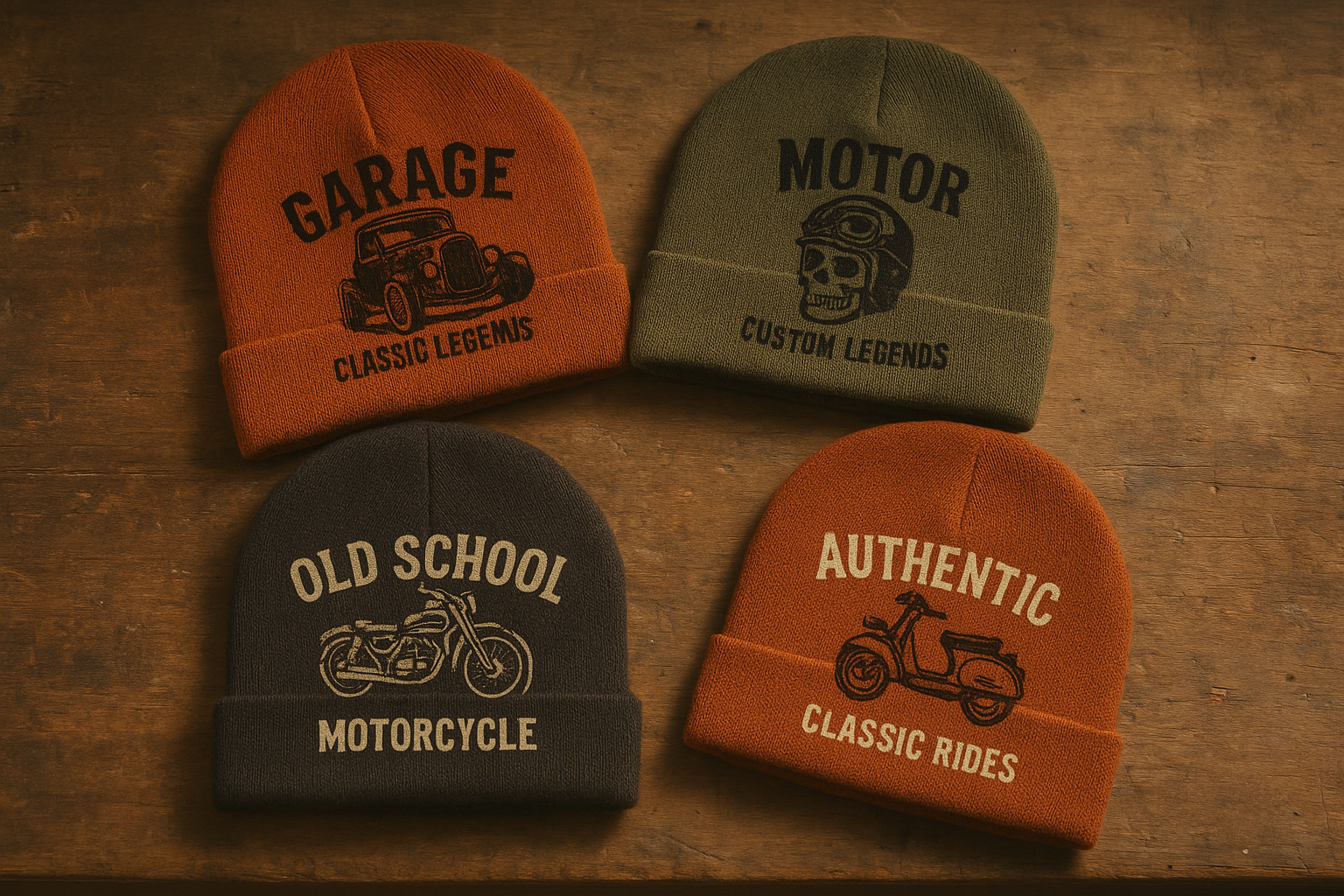
A lineup of custom printed beanies showing how vintage-inspired graphics translate onto knit fabric.
What Is a Custom Printed Beanie?
A custom printed beanie is a knit cap, usually made from acrylic, wool blends, or cotton, that carries a printed design rather than a stitched one. Because printing can hold fine detail, gradients, and several colors without adding bulk, it has become a popular pick for motor-culture brands and small businesses with detailed logos. In addition, printing generally allows faster turnaround on short runs, since there’s no need to digitize artwork for embroidery machines first.
According to Wikipedia’s overview of screen printing, the technique has been used commercially since the early 20th century because it transfers ink accurately onto nearly any flat or slightly curved textile surface. That same precision is why screen printing still works so well on a rounded, textured surface like a beanie. For a closer look at how these caps compare to other custom headwear, this headwear printing guide breaks down the options side by side.
Custom Printed Beanies vs. Embroidered Caps: Which Lasts Longer?
Custom printed beanies and embroidered caps both hold up to regular wear, but they age differently. Embroidery sits on top of fabric as raised thread, so it rarely fades but can fray or loosen at the edges over time. Printed designs, by contrast, bond with the knit surface itself, which is why properly cured prints resist cracking and peeling through repeated washes.
Industry screen-printing standards generally note that plastisol ink cured at the correct temperature can withstand more than 50 wash cycles without major fading or cracking. That durability is one reason custom printed beanies remain a dependable choice for everyday wear, not just one-off event gear. For groups that want both options available, browsing the full beanies category makes it easy to compare styles before deciding.
Why Personalized Beanies Work for Crews, Clubs, and Businesses
Personalized beanies give any group an instant visual identity. Specifically, off-road clubs, hot rod meetups, and small shops use them to mark members, promote events, or simply sell branded merchandise alongside T-shirts and hoodies. Because beanies fit nearly every head size and work in most seasons, they tend to get worn far more often than a single-use event shirt.
Similarly, businesses use personalized beanies as low-cost promotional gear that still feels personal rather than generic. A well-designed cap with a bold logo can turn a customer into a walking advertisement, especially when the design reflects a distinctive aesthetic. For brands built around a rebellious, vintage-meets-modern look, custom beanies with logo artwork pulled from existing collections, such as Off Road or Rat Rod Rebel, keep the whole lineup consistent. Readers can explore specific examples in this guide to custom beanies with logo designs that stand out.
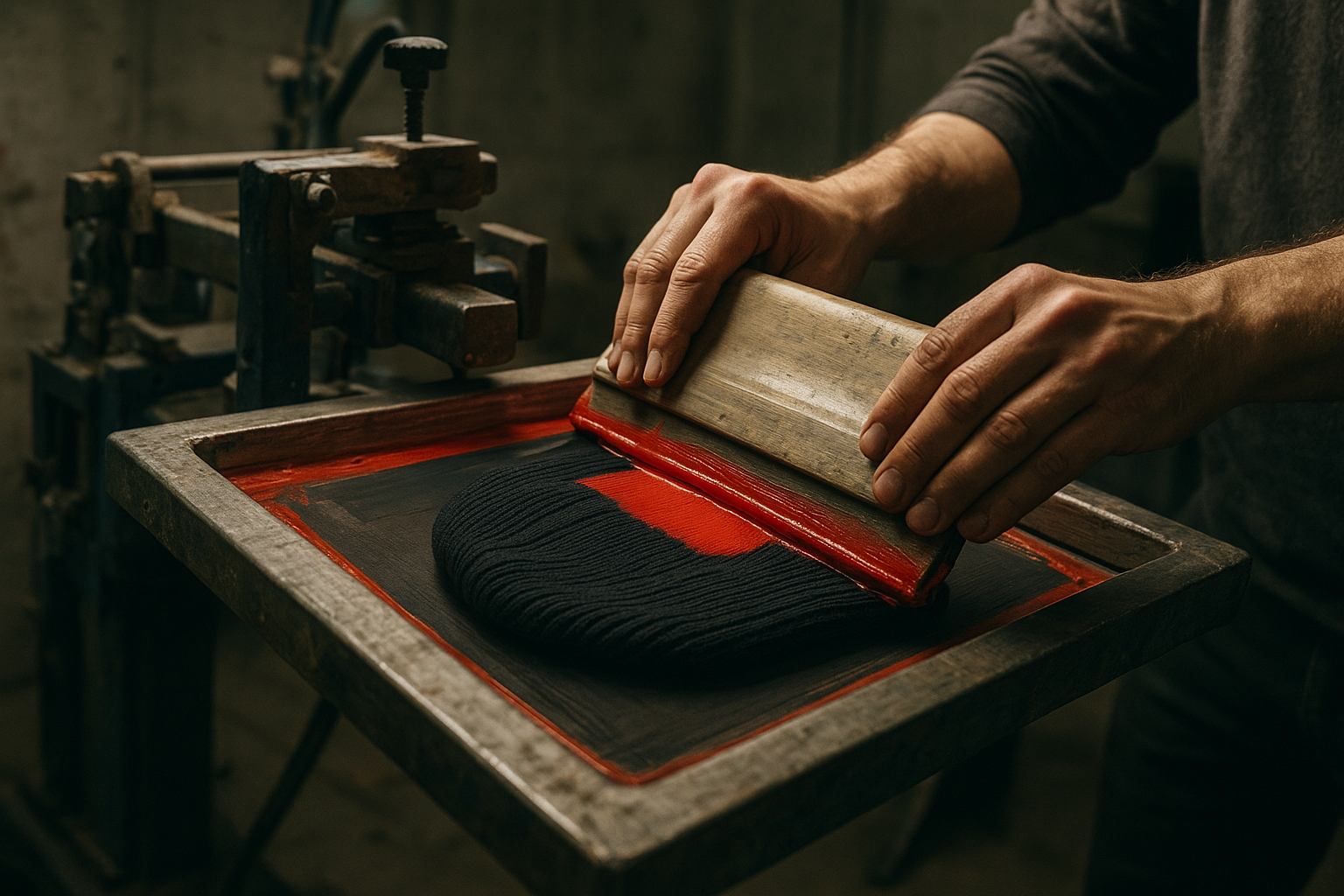
Screen printing presses ink directly into the knit, which helps custom printed beanies resist fading.
Steps to Get Your Beanie Design Printed and Shipped
Ordering custom headwear is more straightforward than most people expect. The process below outlines the typical path from idea to finished product.
- Choose a beanie style. Select a base style and color, such as a cuffed knit or fold-over fit, that works with your design and the climate it will be worn in.
- Submit or finalize your artwork. Provide a high-resolution logo or design file, or work with a designer to size artwork correctly for the printable area on a beanie’s surface.
- Approve a design proof. Review a digital proof showing exact placement, ink colors, and scale before production begins, and request changes if something looks off.
- Confirm quantity and turnaround. Decide on order size and confirm the expected timeline, especially if the beanies are needed for a specific event or launch date.
- Receive and inspect your beanies. Once production finishes, check the shipped beanies for print quality, color accuracy, and overall fit before handing them out or wearing them.
For a more detailed breakdown of this workflow, including file requirements and common timelines, the step-by-step ordering guide covers everything needed before placing a first order.
Materials Behind Durable Printed Beanie Designs
Fabric choice matters just as much as ink quality. Acrylic and cotton-acrylic blends, for instance, hold a printed surface well because their tighter knit reduces texture that can distort fine lines. Wool blends feel warmer but can make small text harder to read once printed, so simpler logos tend to work best on thicker knits.
Furthermore, the fiber itself affects wash performance. According to Wikipedia’s entry on polyester and synthetic fibers, synthetic blends generally resist shrinking and color bleeding better than natural fibers alone, which helps explain why many printed beanies use a cotton-acrylic mix rather than pure wool. As a result, choosing the right base fabric before printing is one of the simplest ways to protect a design’s lifespan. This is also why premium soft-feel fabric, paired with properly cured ink, remains central to how Mild 2 Wild approaches every custom order.
Picking the Right Custom Beanie Style for Your Brand
Style choice should match the audience wearing the beanie. A hot rod shop, for example, might lean into bold, high-contrast graphics inspired by 70s and 90s motor culture, while a family-friendly event might prefer a smaller, cleaner logo placement. Above all, consistency across a themed collection, such as Fuel-Hog Wild Boar or Crazy Rednecks, helps a brand feel intentional rather than thrown together.
In particular, groups ordering in bulk should consider how the design reads at a distance, since beanies are often seen from several feet away rather than up close. Testing a design on a sample piece before a full production run can catch sizing or color issues early. Those exploring color and placement options in more depth can review this guide on beanies built for bold, long-lasting custom printing for extra direction.
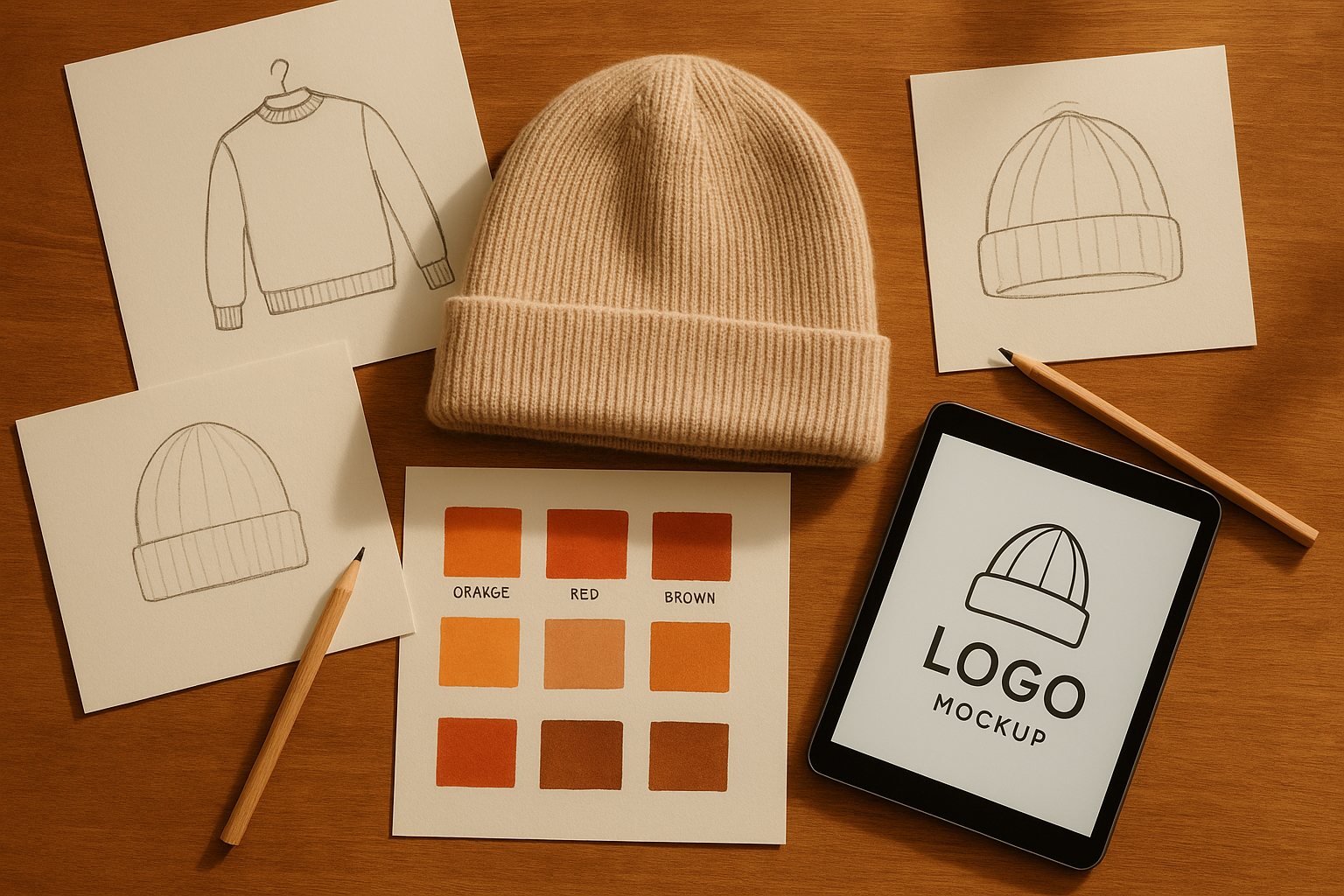
Planning color and placement ahead of time helps a custom beanie design print cleanly.
Frequently Asked Questions About Custom Printed Beanies
What are custom printed beanies?
Custom printed beanies are knit caps that carry a design, logo, or graphic applied through screen printing or a similar method instead of embroidery. They let individuals and businesses create headwear that matches an exact color scheme or artwork.
How are custom printed beanies made?
A design is first set up on film or a digital file, then cured ink or transfer material is pressed onto the knit fabric using heat and pressure. The beanie is inspected and trimmed before it ships.
Why choose printed beanies over embroidered ones?
Printing allows fine detail, gradients, and multiple colors that embroidery cannot easily replicate without added bulk. It is also typically faster and more affordable for small to mid-size orders.
How much do custom printed beanies cost?
Pricing depends on order quantity, ink colors, and beanie style, with the per-unit cost dropping as order size grows. Requesting a quote with exact design details is the most reliable way to get an accurate price.
How long does it take to get custom beanies printed?
Standard turnaround typically runs one to two weeks depending on order size and design complexity. Rush options may be available for time-sensitive events.
Is there a minimum order for custom printed beanies?
Minimums vary by printer, but many shops can accommodate both single pieces and bulk team or event orders. Bulk orders generally lower the cost per beanie.
What materials work best for custom beanie printing?
Acrylic and cotton-acrylic blends hold printed ink well while staying soft and stretchy. Tightly knit fabric gives a smoother surface, which helps fine design details stay sharp.
Can I print a full-color design on a beanie?
Yes, multi-color and even photo-style designs can be printed on beanies, though simpler designs with fewer colors tend to print most crisply on knit fabric. A print shop can advise on the best approach for complex artwork.
What common mistakes should I avoid when ordering custom beanies?
Common mistakes include submitting low-resolution artwork, skipping a proof approval step, and underestimating production time before an event. Confirming sizing and color options in advance also prevents delays.
How do I care for a custom printed beanie so the print lasts?
Washing in cold water, turning the beanie inside out, and air drying all help protect a printed design. Avoiding high heat from dryers and direct ironing on the print extends its life significantly.
Are custom printed beanies good for businesses and events?
Yes, custom printed beanies work well as branded merchandise, event giveaways, or team gear because they are practical, visible, and affordable in bulk. They also double as everyday wear long after an event ends.
What’s the difference between screen printing and heat transfer for beanies?
Screen printing pushes ink directly into the fabric fibers for a durable, low-profile finish, while heat transfer applies a pre-printed design using heat and pressure. Screen printing generally holds up better over many wash cycles on knit fabric.
Can I combine a custom printed beanie with other custom apparel?
Yes, many customers pair custom printed beanies with matching T-shirts, hoodies, or caps for a cohesive look. Using the same artwork across multiple pieces helps reinforce a brand or event theme.
Final Thoughts
Custom printed beanies offer a practical way to turn a simple knit cap into lasting, wearable branding or personal style. From material choice to proof approval, each step in the process affects how sharp and durable the finished design turns out. Therefore, working with a printer that uses quality fabric and proper curing methods, such as Mild 2 Wild Custom T-Shirt & Apparel, makes a noticeable difference over months of regular wear. Anyone ready to start a project can visit Mild 2 Wild Custom T-Shirt & Apparel to explore existing collections or request a fully custom design.