
Blog
Screen Printed T-Shirts That Last: Built Wild & Loud


Screen printed t-shirts are shirts decorated using a stencil-based ink process that pushes color through a fine mesh screen onto fabric, creating bold, long-lasting graphics. At Mild 2 Wild Custom T-Shirt Apparel, this method sits at the heart of every vintage-inspired design, from Off Road graphics to Rat Rod Rebel tees. Unlike quick digital prints that can crack or fade, screen printing bonds ink directly into the fabric fibers. As a result, the artwork holds up wash after wash. This guide explains how the process works, why it outperforms other printing styles, and how to order custom screen printed t-shirts for yourself or your crew.
What Are Screen Printed T-Shirts?
Screen printed t-shirts are garments printed using a manual or automatic press that forces thick, pigment-based ink through a mesh stencil directly onto the fabric surface. Each color in a design requires its own screen, so multi-color artwork demands precise registration. Specifically, this is why screen printing works so well for bold graphics built from solid color blocks, like the vintage motorcycle and off-road art featured across Mild 2 Wild’s collections.
Because the ink sits on top of and slightly within the weave, screen printed designs feel substantial and resist peeling far better than adhesive-based transfers. In addition, the technique scales efficiently for bulk ordering, since once a screen is prepared, dozens or even hundreds of identical shirts can be printed quickly at a consistent quality.
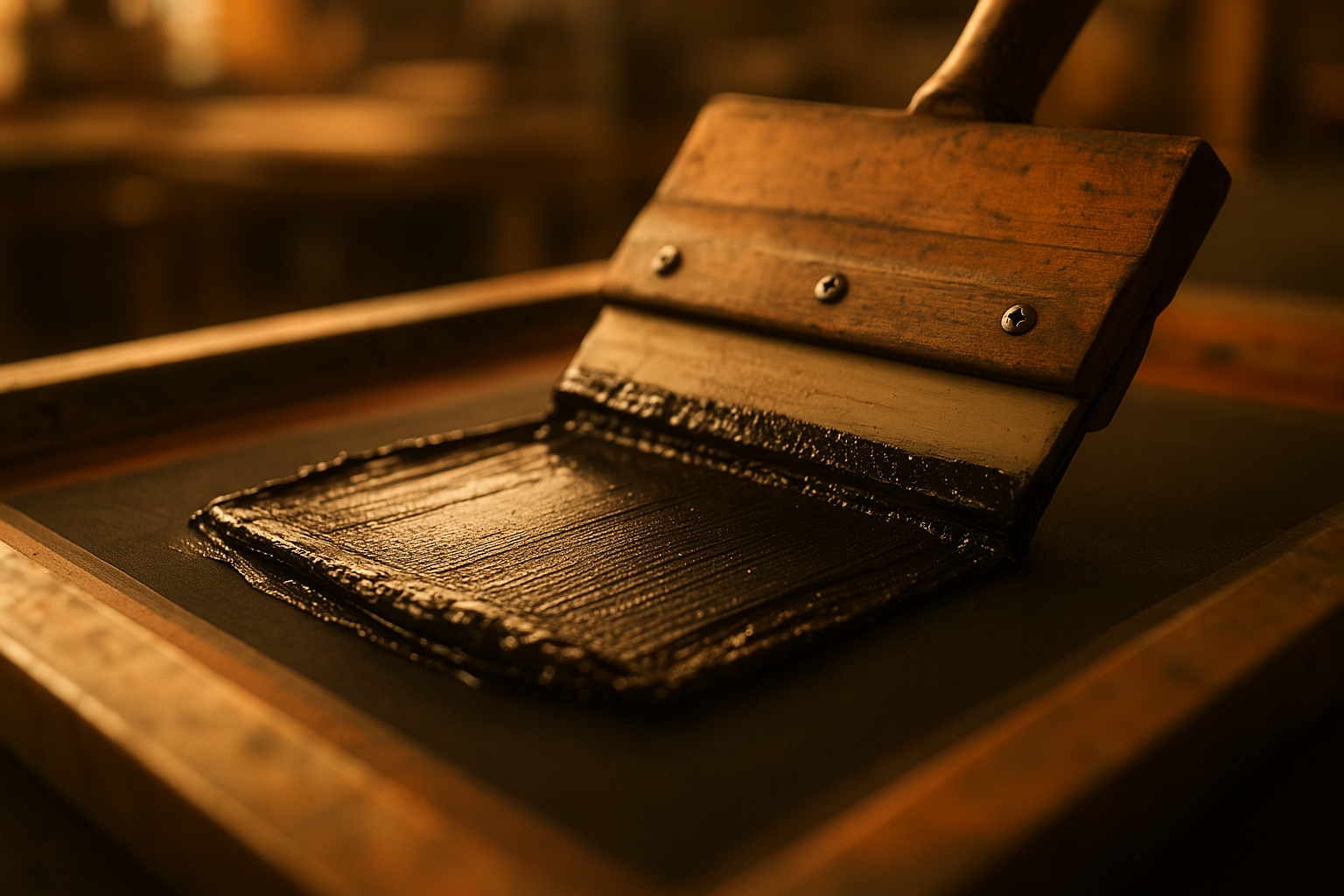
Ink is pressed through a mesh stencil to create durable screen printed t-shirts.
How Screen Printing Works: The Process Behind Every Design
Every custom screen printed t-shirt travels through several deliberate stages before it reaches a closet or a garage shelf. Understanding each step helps explain why the finished product holds its color for years rather than months. Below is the general process most print shops follow.
- Design and Color Separation: Artwork is finalized and separated into individual color layers, since each color in the design requires its own printing screen to keep lines crisp and registration accurate.
- Screen Preparation: A fine mesh screen is coated with light-sensitive emulsion, exposed to the design, and washed out to create a stencil that allows ink to pass through only the printed areas.
- Ink Mixing and Registration: Ink colors are mixed to match the approved design, and the screens are aligned precisely on the press so every color lands in exactly the right spot on the shirt.
- Printing the Garment: The shirt is loaded onto the press, and a squeegee, a rubber-edged tool, pulls ink across the screen, pressing it through the mesh and into the fabric fibers one color at a time.
- Curing and Quality Check: Printed shirts pass through a heat tunnel that cures the ink so it bonds permanently with the fabric, followed by a quality check for color accuracy and placement before shipping.
Because each stage builds on the last, a mistake early in the process, such as poor color separation, can affect the entire run. Therefore, most experienced print shops review a digital proof with the customer before any ink touches fabric.
Why Screen Printed T-Shirts Outlast Other Printing Methods
Screen printing has remained a dominant method for custom printed apparel for one main reason: durability. According to widely cited apparel-decoration testing, a properly cured screen printed garment can survive more than 50 wash cycles without significant fading, while basic heat-transfer vinyl often shows cracking well before that point. You can review a general overview of the technique on Wikipedia’s screen printing entry for additional technical background.
In contrast, digital transfers sit on top of the fabric rather than bonding within it, which makes them more prone to peeling at the edges. Screen printing ink, particularly plastisol-based ink, cures into a flexible layer that moves with the fabric instead of against it. As a result, shirts printed this way tend to keep their bold color and sharp edges through years of regular wear, which is one reason it remains the standard for durable printed t-shirts. For a deeper look at fabric and print longevity, see this guide on what makes a t-shirt print last longer.
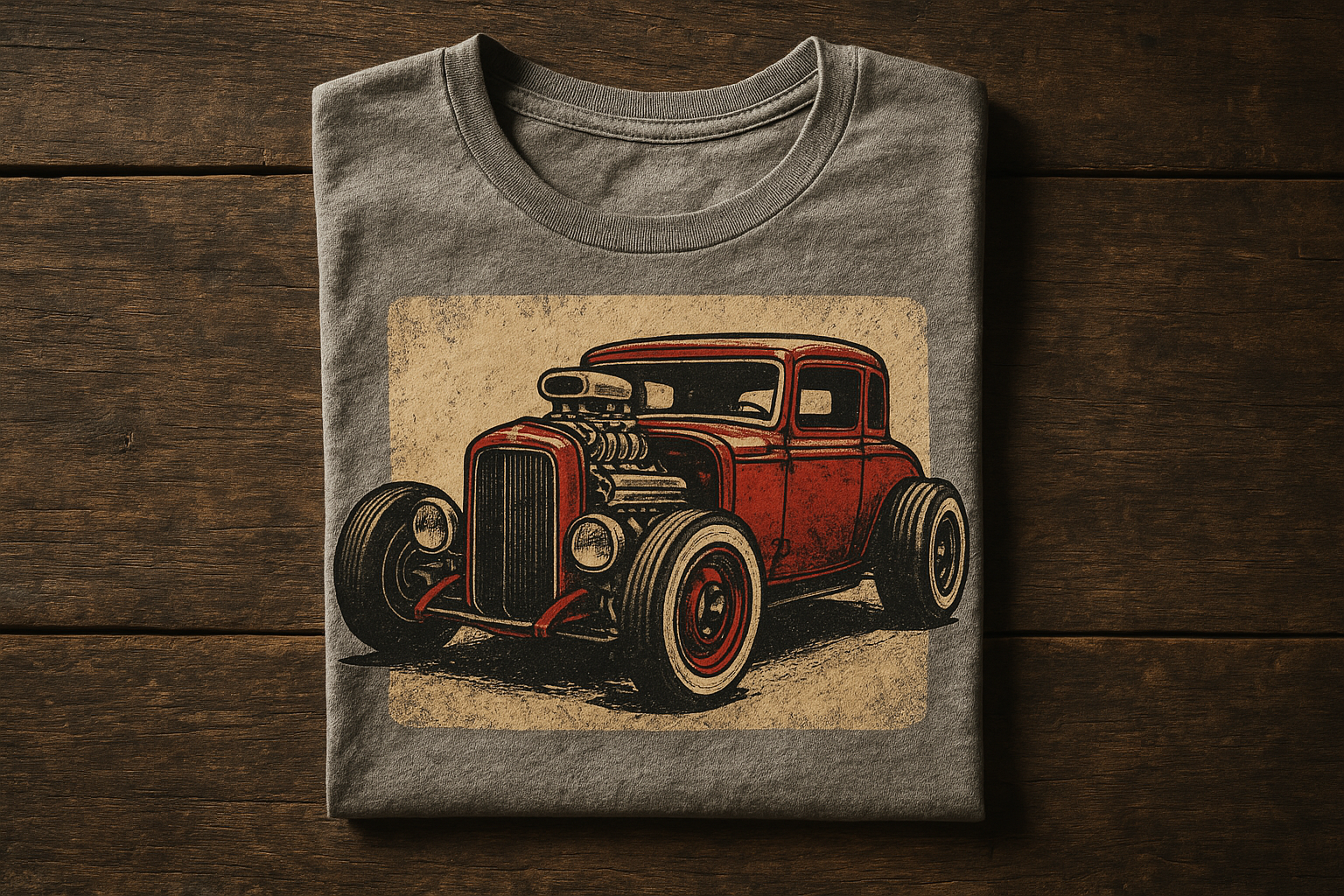
Bold, vintage-inspired artwork holds its detail on quality screen printed t-shirts.
Screen Printed Tees vs. Other Custom Apparel Printing
Digital printing, sometimes called direct-to-garment printing, works well for highly detailed or photographic designs printed in small quantities. However, for bold, high-contrast graphics like the ones found in Mild 2 Wild’s Fuel-Hog Wild Boar and Crazy Rednecks collections, screen printing generally produces richer color saturation and better wash resistance. Similarly, when an order grows into dozens or hundreds of identical shirts, screen printing becomes noticeably more cost-effective per unit.
Custom Screen Printed T-Shirts for Every Style
Beyond ready-made collections, custom screen printed t-shirts let customers bring their own design vision to life using the same premium, soft-feel fabric found across every product line. Whether the goal is a personal project, a family reunion shirt, or branded merchandise for a small business, the process starts the same way: submitting artwork and choosing a garment style. You can explore the full range of vintage-inspired options through Mild 2 Wild’s custom t-shirt collection, which spans men’s, women’s, and children’s sizing along with hoodies, sweatshirts, and headwear.
For shoppers who want a proven blank canvas, the unisex classic tee offers a comfortable, durable base that takes screen printed ink especially well. Above all, every custom order uses the same in-house printing quality as the branded “Built Wild. Born Loud.” lineup, so there is no compromise between a personal design and a themed collection piece.
Choosing Fabric That Complements Custom Printed Apparel
Fabric choice affects how well screen printed t-shirts hold their design over time. Soft-feel cotton and cotton-blend materials generally accept ink more evenly than looser or synthetic-heavy weaves, since the tighter weave gives the ink a stable surface to bond with. Consequently, premium fabric blends tend to resist the fading and cracking that lower-quality shirts often show after just a handful of washes.
For readers considering their first custom order, this personalized t-shirt printing guide breaks down fabric weights, fit options, and design tips in more detail. It is also worth noting that federal textile labeling standards, outlined by the FTC’s textile labeling guidance, require accurate fiber content disclosure, which is a useful reference when comparing fabric quality across different apparel printers.
Bulk Screen Printing for Teams, Events, and Businesses
Because a prepared screen can print the same design repeatedly with little variation, bulk ordering is one of the strongest advantages of this method. Event organizers, small businesses, and clubs often turn to screen printed t-shirts specifically because the per-shirt cost drops as quantity increases. In particular, once initial setup and screens are complete, larger runs become far more efficient than digital alternatives.
Furthermore, bulk orders still allow for multiple sizes across men’s, women’s, and children’s cuts, so a single design can outfit an entire group without sacrificing fit. Anyone planning a themed event or team order can start by browsing Mild 2 Wild’s full apparel catalog for design inspiration before requesting a custom quote.
Frequently Asked Questions About Screen Printed T-Shirts
What are screen printed t-shirts?
Screen printed t-shirts are garments decorated by pushing thick ink through a mesh stencil directly onto the fabric. Each color uses its own screen, so the ink sits deep in the fibers and resists cracking far longer than transfer-based prints.
How long do screen printed t-shirts last?
A properly cured screen printed shirt can survive 50 or more wash cycles without major fading. In contrast, cheaper vinyl or basic transfer prints often crack or peel within a fraction of that number.
What is the difference between screen printing and DTG printing?
Screen printing pushes ink through a mesh stencil and works best for bold, solid-color designs at volume, while direct-to-garment printing sprays ink like an inkjet printer and suits detailed art in small runs. Screen printing generally holds up better under repeated washing.
How much do custom screen printed t-shirts cost?
Pricing depends on shirt style, number of ink colors, and order quantity, since larger bulk orders reduce the per-shirt setup cost. Requesting a quote based on your exact design and quantity is the most accurate way to know the price.
Can screen printed t-shirts be bulk ordered?
Yes, screen printing is especially efficient for bulk orders because once a screen is prepared, it can print dozens or hundreds of identical shirts quickly. This makes it a popular choice for teams, events, and businesses.
What fabrics work best for screen printing?
Soft-feel cotton and cotton-blend fabrics generally accept screen printing ink best, since the weave holds the ink securely without stretching it thin. Premium blends also tend to resist fading better through repeated washing.
How many colors can be screen printed on a shirt?
Most screen printing shops can print anywhere from one to six or more colors on a single design, though each additional color adds a screen and setup time. Simpler color palettes typically keep costs lower and production faster.
Why do screen printed t-shirts fade over time?
Fading usually happens when ink is not cured at the correct temperature or when a shirt is washed in hot water and dried on high heat. Following the care instructions helps the print stay bold for years.
What is the minimum order quantity for custom screen printing?
Minimum quantities vary by print shop, though many screen printers set a small minimum to offset screen setup costs. Some shops can accommodate smaller personal orders alongside larger bulk requests.
How long does it take to make custom screen printed t-shirts?
Turnaround typically ranges from several days to a couple of weeks, depending on design complexity, order size, and current shop workload. Rush options may be available for time-sensitive events.
What common mistakes should I avoid with screen printed designs?
Common mistakes include using too many colors for the budget, choosing low-resolution artwork, and skipping a proof review before printing. Reviewing a digital mockup first helps catch issues before ink hits fabric.
Are screen printed t-shirts eco-friendly?
Screen printing can be relatively eco-conscious when shops use water-based inks and efficient screen reclaiming processes, though impact varies by facility. Choosing durable, long-lasting prints also reduces how often shirts need replacing.
How do I care for screen printed t-shirts to prevent cracking?
Wash screen printed shirts inside out in cold water, skip the fabric softener, and tumble dry on low heat or air dry. These steps protect the ink layer and keep designs looking sharp much longer.
Can I screen print my own custom design?
Yes, most custom apparel printers accept personal artwork files and will help refine them for screen printing if needed. Submitting a high-resolution design with clear color separation speeds up the setup process.
Final Takeaway
Screen printed t-shirts remain one of the most reliable ways to get bold, long-lasting graphics on soft, comfortable fabric. From the careful color separation stage through curing and quality checks, every step of the process exists to make sure a design survives years of wear rather than fading after a few washes. Whether you are drawn to a themed collection like Off Road or Rat Rod Rebel, or you want a fully custom design built from scratch, screen printing offers durability that few other methods can match. In short, choosing screen printed t-shirts means choosing artwork that is meant to last as long as the shirt itself.