
Blog
Soft Fabric for T-Shirts: What Makes It Feel Premium – Mild 2 Wild Custom T-Shirt Apparel LLC


Soft fabric for t-shirts determines whether a tee earns a permanent spot in your weekly rotation or ends up folded at the bottom of a drawer. Shoppers scrolling through custom apparel often notice the graphic first, yet the fabric underneath the print controls comfort, fit, and how long that bold design stays vibrant wash after wash. Because fabric choice affects everything from breathability to print durability, this guide breaks down exactly what makes fabric feel soft, compares two of the most popular soft options — tri-blend and jersey knit — and shows you what to check before placing a custom or bulk order. Along the way we reference fiber science, federal textile standards, and real product examples available at Mild 2 Wild Custom T-Shirt Apparel. As part of our ongoing Printing Guides series, this article goes deeper than most fabric comparisons you will find elsewhere.
Quick answer: Soft fabric for t-shirts feels smooth against skin because it is knit from finer, more tightly spun fibers — such as combed or ring-spun cotton, tri-blend cotton-poly-rayon mixes, or jersey knit cotton — that resist pilling and hold their texture through many wash cycles. In particular, tri-blend fabric tends to feel the lightest and most relaxed, while jersey knit stays closest to a classic, breathable cotton hand-feel.
What Is Soft Fabric for T-Shirts?
Soft fabric for t-shirts is fabric engineered so its individual fibers feel smooth rather than coarse against skin. Manufacturers achieve this by combing raw cotton to remove short, rough fibers, then tightly twisting the longer fibers into ring-spun yarn. As a result, the finished knit feels finer and drapes more naturally than fabric made from shorter, uncombed fibers.
In contrast, standard carded cotton keeps those shorter fibers in the mix. Consequently, it often feels stiffer right out of the package and tends to pill or thin out faster after several washes. Meanwhile, blended and specialty knits — including jersey and tri-blend — take softness a step further by changing either the knit structure or the fiber mix itself, which is exactly what we unpack below.
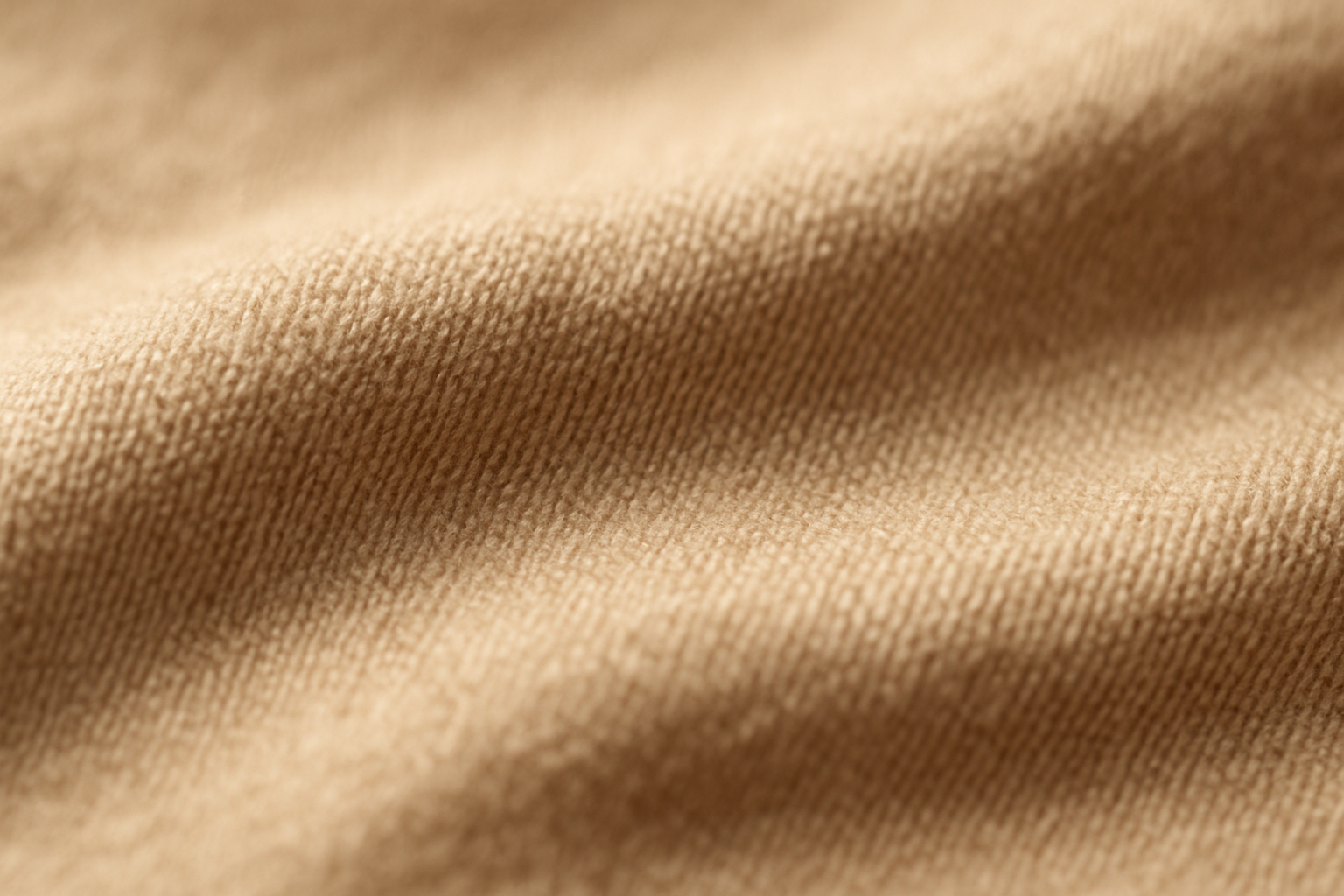
Soft fabric for t-shirts starts with fine, tightly spun fibers that resist roughness over time.
Why Soft T-Shirt Fabric Matters More Than You Think
Above all, fabric quality shapes how a shirt performs over its entire lifetime, not just how it feels on day one. Because ring-spun cotton fibers are twisted more tightly than carded cotton, the resulting yarn is notably stronger and less prone to breaking down during washing. For context, cotton remains one of the most widely produced natural fibers globally, according to background production data referenced on Wikipedia’s cotton overview, which means fiber quality within that supply varies significantly by processing method.
Furthermore, softer fabric tends to hold screen print ink more evenly. A rougher surface can cause ink to sit unevenly across fibers, leading to cracking or fading sooner. Therefore, choosing quality fabric protects both comfort and the artwork printed on it, which matters especially for bold, detailed designs like vintage-inspired motor culture graphics.
In addition, soft fabric typically breathes better. Tighter, finer knits allow air to pass through more consistently than bulky, uneven weaves, so shirts feel less clingy during warm weather or active wear.
Jersey Knit Fabric Explained: The Classic Soft Feel
Jersey knit is the fabric structure behind most everyday t-shirts, and it is a major reason cotton tees feel soft in the first place. Specifically, jersey is a single-knit construction with a smooth face on one side and a slightly textured back, which gives it natural stretch without requiring any added spandex. As a result, jersey drapes close to the body while still allowing airflow.
Because jersey is typically made from 100% cotton or a cotton-poly blend, its softness depends heavily on whether the cotton itself is combed, ring-spun, or standard carded cotton. In other words, not all jersey feels the same — a ring-spun jersey tee will always outperform a carded jersey tee in softness and pilling resistance. This is exactly the kind of nuance that matters when comparing options like this short sleeve unisex tee or a soft, breathable toddler jersey t-shirt, since younger skin especially benefits from a smooth, low-irritation surface.
Jersey knit also tends to hold screen print designs very well, since its smooth face gives ink an even surface to bond to. Consequently, jersey remains the industry default for everyday custom tees, event shirts, and family apparel orders.
Tri-Blend Fabric Explained: The Ultra-Soft Modern Option
Tri-blend fabric combines three fibers — typically cotton, polyester, and rayon — into a single yarn. Because each fiber contributes a different property, the resulting fabric feels lighter, drapes more loosely, and often has a slightly heathered, vintage-washed appearance straight off the rack. For shoppers who want that broken-in feel on day one, a tri-blend option like this unisex tri-blend tee demonstrates the difference clearly.
Specifically, the cotton provides softness and breathability, the polyester adds durability and wrinkle resistance, and the rayon contributes drape and a silky hand-feel. Similarly, because polyester fibers resist moisture absorption, tri-blend shirts often dry faster than 100% cotton jersey after washing or heavy activity.
However, tri-blend fabric behaves differently under heat, since polyester and rayon are more heat-sensitive than cotton. Therefore, printing methods and wash care both need slight adjustments compared to standard jersey, a point we cover in detail later in this guide.
Tri-Blend vs Jersey: Which Soft Fabric Wins for T-Shirts?
Neither fabric is universally “better” — instead, each wins in different situations. In short, the right choice depends on the look, feel, and print method you want.
Choose jersey knit when:
- You want a true, classic cotton feel with a crisp, clean print surface.
- The order includes toddlers, kids, or sensitive-skin wearers who need a simple, breathable fabric.
- You are running large screen-print jobs where consistent ink coverage matters most.
Choose tri-blend when:
- You want an ultra-lightweight, vintage-soft drape straight out of the package.
- Faster drying time and wrinkle resistance matter for travel or active wear.
- A slightly heathered, premium-feeling retail look fits your brand better than flat cotton.
In practice, both fabrics qualify as soft fabric for t-shirts — the real difference lies in drape, weight, and how each one reacts to printing and washing, which is exactly why fabric weight deserves its own explanation next.
Understanding Fabric Weight (GSM) and Softness
Fabric weight is measured in grams per square meter, commonly abbreviated as GSM. This measurement system falls under the broader units of textile measurement used across the apparel industry to standardize fabric comparisons. Generally speaking, lighter fabric — around 120 to 150 GSM — feels airy and soft but shows less print opacity. Mid-weight fabric, roughly 150 to 180 GSM, balances softness, durability, and print clarity, which is why it is the most common choice for custom apparel.
Heavier fabric above 180 GSM feels sturdier and holds its shape longer, though it can feel less soft initially until it is washed a few times. As a result, matching GSM to your intended use — everyday wear, event giveaways, or layering pieces — is just as important as choosing between cotton, jersey, or tri-blend.
Types of Soft T-Shirt Fabric You’ll Find in Custom Apparel
Several fabric types qualify as soft, though each offers a slightly different feel and performance level.
- Ring-spun cotton: Finer, stronger yarn that feels smooth and holds up well through frequent washing.
- Combed cotton: Processed to remove short fibers, resulting in a cleaner, softer surface.
- Jersey knit cotton: The classic single-knit construction behind most soft, breathable everyday tees.
- Cotton-poly blends: Combine cotton’s softness with polyester’s wrinkle resistance and quick-dry properties.
- Tri-blend fabric: A mix of cotton, polyester, and rayon that feels notably lightweight and soft with a relaxed drape.
- Brushed fleece: Common in heavier soft-feel layers such as hoodies and sweatshirts, offering a plush inner surface.
For heavier layers, shoppers exploring soft-feel sweatshirts built for comfort and bold style will notice the same soft-fabric principles applied to thicker fleece construction. Meanwhile, ready-made tees like this unisex graphic tee or this rebel-styled unisex shirt demonstrate how soft-feel fabric pairs with vintage-inspired print designs.
How to Choose the Best Soft Fabric for Your Next Custom Order
Selecting the right soft fabric for t-shirts does not have to be complicated. Follow these steps to narrow down the best option for a custom or bulk order.
- Check the fiber content listed on the tag or product page to confirm whether it is ring-spun, combed, jersey, or blended cotton before you commit to an order.
- Consider the fabric weight in GSM, since mid-weight options generally balance softness, durability, and print clarity best for most custom apparel needs.
- Ask about knit density, because a tighter knit resists pilling and holds screen print or DTG designs more evenly over time.
- Match the fabric to its intended use, choosing lighter jersey or tri-blend for everyday wear and heavier soft fleece for cooler layers.
- Review the recommended wash-care instructions before ordering so the soft feel lasts through your normal laundry routine and repeated wear.
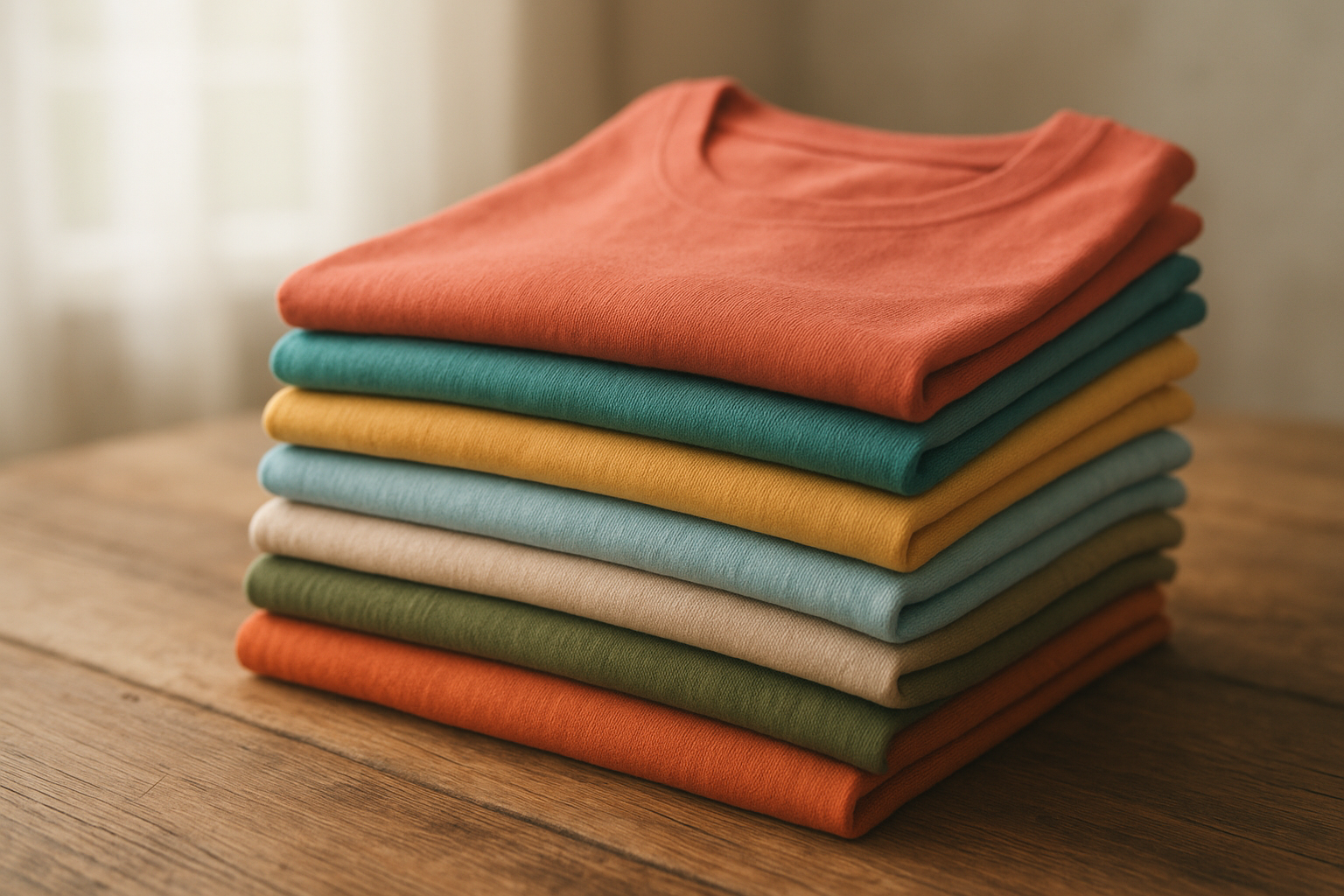
Choosing soft fabric for t-shirts starts with checking fiber content and knit density before ordering.
Soft Fabric for T-Shirts vs. Standard Cotton: What’s the Real Difference?
At first glance, two cotton shirts might look identical. However, the difference becomes obvious after a few washes. Standard carded cotton often develops a rougher hand-feel and small fabric pills, particularly under the arms and around the collar.
By comparison, soft fabric for t-shirts made from ring-spun cotton, jersey knit, or tri-blend construction resists that breakdown far longer. Similarly, it tends to hold its shape better, since the tighter fiber structure resists stretching out of proportion. In short, the upfront cost difference usually pays off through a longer usable lifespan.
How Soft Fabric Affects Screen Printing, DTG, and Sublimation
Print method compatibility is one area the fabric comparison conversation often skips, yet it directly affects how a finished design looks and lasts. Screen printing, for instance, performs best on jersey knit and tightly woven ring-spun cotton because the flat, even surface lets ink sit consistently across the fibers, as seen on designs like this off-road inspired tee.
Direct-to-garment printing, often shortened to DTG, works well on both jersey and tri-blend fabric, though higher cotton content generally produces richer color saturation. In contrast, sublimation printing requires high polyester content to bond dye permanently into the fibers, which makes tri-blend a stronger candidate than 100% cotton jersey for that specific process.
Therefore, before finalizing a fabric choice, it is worth confirming which print method your order will use, since the “softest” fabric on paper is not always the best match for every printing technique.
Sustainability Considerations for Soft Fabric
Sustainability has become part of the softness conversation, too. Organic and combed cotton generally require fewer chemical treatments during processing, which can translate into a gentler fabric hand-feel alongside a lower environmental footprint. Meanwhile, recycled polyester used in some tri-blend fabrics reduces reliance on virgin plastic without sacrificing the soft, lightweight drape shoppers expect.
As a result, shoppers who care about both comfort and sourcing now have more informed options than a simple cotton-versus-polyester choice. Above all, checking the specific blend and origin listed on a product page remains the most reliable way to align fabric choice with sustainability goals.
Sizing, Fit, and Soft Fabric: Getting It Right for Everyone
Soft fabric behaves differently depending on cut and size, which matters when you are ordering for a mixed group. Jersey knit’s natural stretch makes it forgiving across unisex sizing, while tri-blend’s lighter weight can run slightly more relaxed through the shoulders and sleeves. For example, a well-cut short sleeve unisex tee or a soft toddler jersey t-shirt shows how the same fabric family adapts across very different body types and ages.
Consequently, when ordering for teams, families, or events with mixed sizing, it helps to request a fabric and fit sample before committing to a full bulk run. This small extra step prevents surprises once shirts arrive at scale.
Caring for Soft-Feel Fabric So It Lasts Wash After Wash
Proper care extends the life of even the highest-quality soft fabric. For instance, washing shirts inside out in cold water reduces friction against the printed design while protecting fiber softness.
Additionally, high heat is the biggest enemy of soft fabric. Both hot water washing and high-heat tumble drying accelerate fiber breakdown and can cause prints to crack prematurely. This applies even more to tri-blend fabric, since its polyester and rayon content is especially heat-sensitive compared to plain jersey cotton. Instead, air drying or using a low-heat setting helps maintain both texture and print quality over time.
It is also worth noting that textile labeling requirements from the U.S. Federal Trade Commission require manufacturers to disclose fiber content and care instructions on garment tags, as detailed in FTC textile labeling guidance. Reading that tag before the first wash is a simple habit that protects your investment.
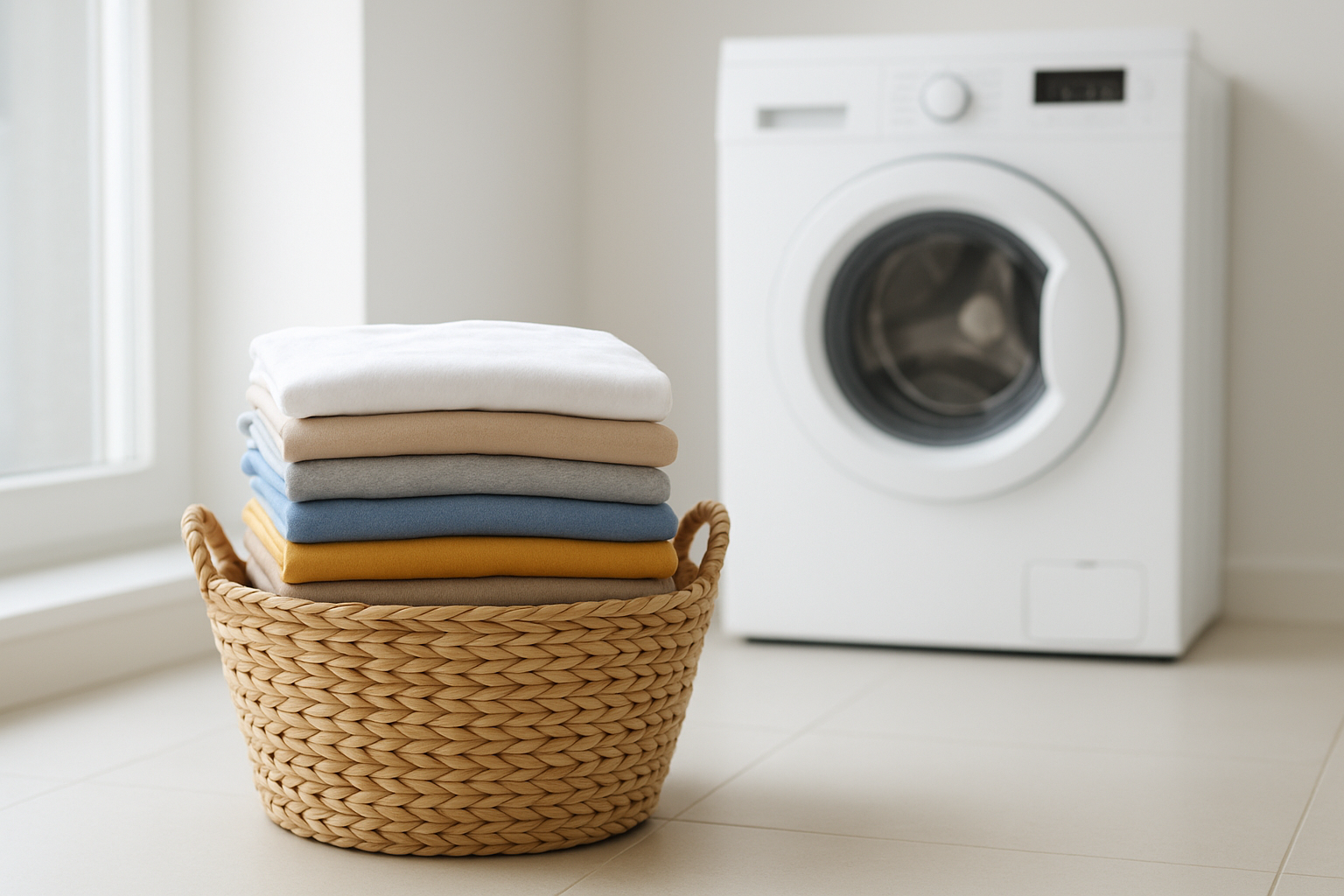
Cold water washing keeps soft fabric for t-shirts feeling new through many laundry cycles.
Frequently Asked Questions About Soft Fabric for T-Shirts
What is soft fabric for t-shirts?
Soft fabric for t-shirts is fabric woven or knit from fine, tightly spun fibers, such as combed or ring-spun cotton, that feels smooth against skin rather than rough or scratchy. It typically resists pilling and keeps its softness through repeated washing.
What fabric feels the softest for t-shirts?
Ring-spun combed cotton and cotton-modal blends are generally considered the softest options for t-shirts. Tri-blend fabric, which mixes cotton, polyester, and rayon, also feels very soft and drapes well, while jersey knit stays closest to a classic cotton feel.
Is tri-blend or jersey fabric softer for t-shirts?
Tri-blend fabric usually feels lighter and drapes more loosely straight out of the package, while jersey knit feels closer to a traditional cotton hand-feel. Neither is objectively softer for every use — tri-blend suits relaxed, lightweight wear, while jersey suits crisp print jobs and sensitive-skin wearers like toddlers.
What is jersey knit fabric?
Jersey knit is a single-knit fabric structure with a smooth face and a slightly textured back, giving it natural stretch and breathability without added spandex. It is the most common construction behind everyday cotton t-shirts.
How is soft fabric for t-shirts made?
Manufacturers comb raw cotton to remove short, coarse fibers, then tightly twist the remaining long fibers into ring-spun yarn. This process creates a smoother, stronger thread that knits into a softer, more durable fabric.
Why does soft fabric matter for custom t-shirts?
Soft fabric matters for custom t-shirts because it affects both comfort and how well the printed design holds up. A smoother surface accepts screen print ink more evenly and resists cracking as the fabric flexes.
Is cotton or a cotton-poly blend softer for t-shirts?
It depends on the quality of each material. High-quality ring-spun cotton can feel just as soft as a cotton-poly blend, but blends often add extra stretch and wrinkle resistance while staying lightweight.
What GSM is best for soft t-shirt fabric?
Mid-weight fabric between roughly 150 and 180 GSM generally offers the best balance of softness, durability, and print clarity for most custom t-shirt orders.
Does soft fabric for t-shirts cost more?
Premium soft fabric usually costs somewhat more than basic carded cotton because of the extra combing and spinning steps involved. Many shoppers find the added comfort and longer wear-life worth the modest price difference.
How long does soft fabric last with regular washing?
Quality soft-feel fabric can maintain its texture and print integrity through dozens of wash cycles when cared for properly. Washing in cold water and avoiding high heat drying significantly extends its lifespan.
What is ring-spun cotton?
Ring-spun cotton is yarn made by twisting and thinning cotton fibers together into a fine, strong strand during spinning. This process produces a softer, more durable fabric than standard carded cotton.
What common mistakes damage soft t-shirt fabric?
Washing in hot water, using excessive detergent, and machine drying on high heat are common mistakes that break down soft fibers and fade prints faster. Turning shirts inside out before washing also helps protect the print.
What is the best way to wash soft-feel t-shirts?
Wash soft-feel t-shirts inside out in cold water on a gentle cycle, then air dry or tumble dry on low heat. This approach protects both the fabric’s texture and the printed design.
Can soft fabric hold screen print designs well?
Yes, soft, tightly knit fabric generally holds screen print ink better because the smoother surface allows ink to bond evenly without soaking through unevenly. This results in crisper, longer-lasting graphics, as seen on designs like this off-road inspired tee.
Does soft fabric for t-shirts shrink after washing?
Some shrinkage can occur, especially with 100% cotton, but pre-shrunk soft fabric minimizes this effect significantly. Washing in cold water and avoiding high-heat drying further reduces the chance of shrinkage, as shown across shirts like this rat rod rebel design.
Final Thoughts on Soft Fabric for T-Shirts
Ultimately, soft fabric for t-shirts is about more than first impressions at checkout. It determines how a shirt feels after ten washes, how long a bold vintage-inspired print stays crisp, and whether a tee becomes a genuine wardrobe staple. As outlined above, checking fiber content, knit density, GSM weight, and print compatibility before ordering makes a measurable difference in comfort and durability, whether you choose jersey knit, tri-blend, or straight ring-spun cotton. Whether you are browsing ready-made designs or planning a custom bulk order, prioritizing quality soft fabric pays off wash after wash.
This guide was written and reviewed by the admin team at Mild 2 Wild. Have a question we did not cover? Join the discussion (0 comments) below. For more soft-feel apparel options built on premium fabric, visit Mild 2 Wild Custom T-Shirt Apparel.